

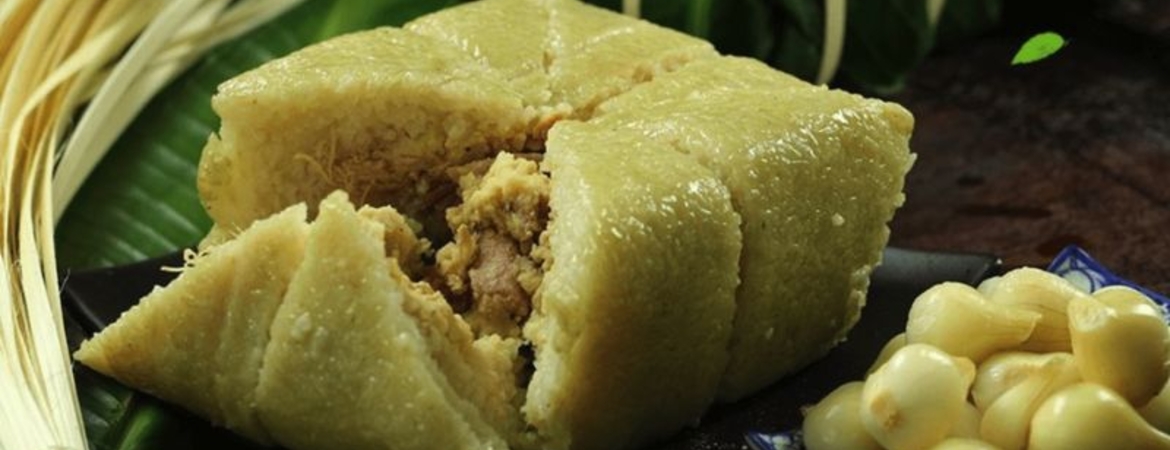
Understanding traditional Tet foods is one of the best ways to understand Vietnamese culture, because food sits at the center of family reunions, ancestor worship, and celebration during Lunar New Year. For travelers visiting Vietnam, experiencing these dishes offers insight local traditions that go far beyond taste. On Cat Ba Island, places like Quiri Pub & Restaurant and Quiri Kitchen allow visitors to explore Vietnamese cuisine culture through dining and cooking experiences while staying at the centrally located Quiri complex at 135 Tung Dinh Street, Cat Ba Island, Hai Phong.
Why Traditional Tet Foods Are Important in Vietnamese Culture
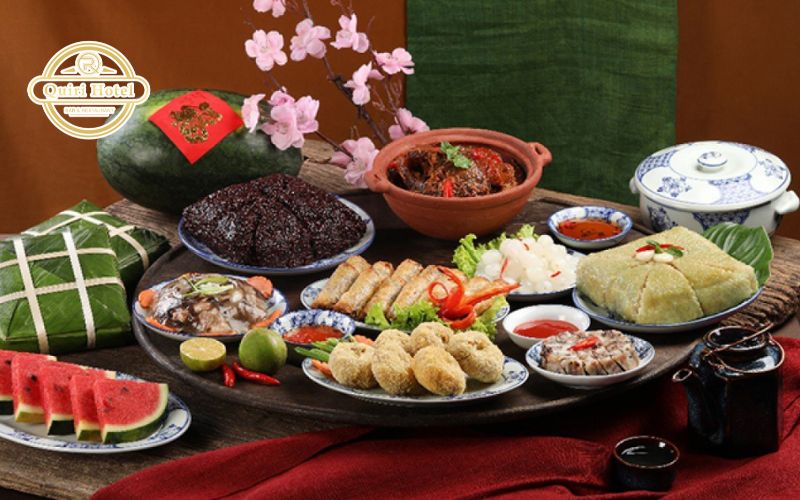
Tet, or Vietnamese Lunar New Year, is the most important holiday in Vietnam, and food plays a symbolic role in welcoming prosperity, luck, and happiness for the coming year. Many dishes prepared during Tet represent wishes for family unity and good fortune.
Tet meals are not only about celebration but also about respect for ancestors. Families prepare special food trays placed on ancestral altars before sharing meals together, reinforcing the connection between past and present generations.
Symbolism is deeply embedded in traditional Tet foods Vietnam. Colors, shapes, and ingredients often carry meaning. For example, sticky rice represents unity and connection, while pork symbolizes abundance and prosperity. These symbolic layers transform Tet meals cultural rituals rather than simple dining experiences.
Regional differences also influence Tet food traditions. Northern Vietnam often features square sticky rice cakes and boiled chicken for ancestral offerings, while southern regions may emphasize caramelized pork dishes and cylindrical sticky rice cakes. These regional variations reflect local ingredients, climate, and cultural history.
Because Tet food preparation usually begins days before the holiday, cooking itself becomes a family bonding activity. Generations gather together to prepare dishes, preserving recipes and traditions through shared experience.
Most Popular Traditional Tet Foods in Vietnam
Several dishes appear consistently in Vietnamese homes during Tet celebrations, and each one carries its own cultural significance.
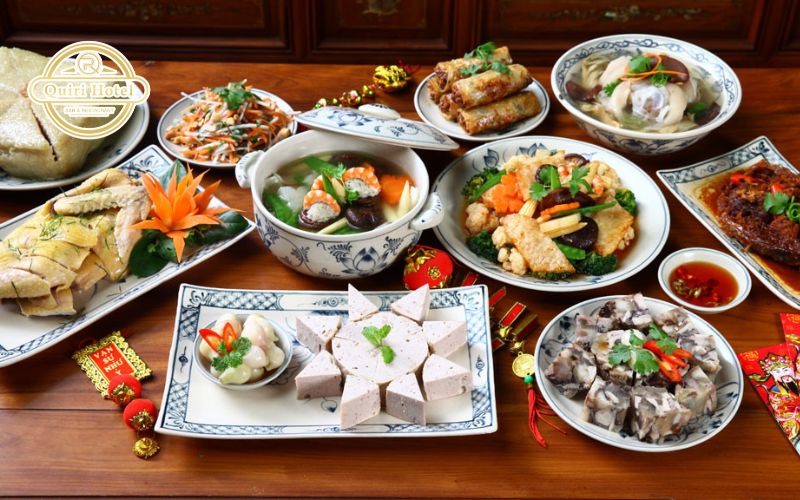
Banh Chung is considered the most iconic Tet food in Vietnam. Made glutinous rice, mung beans, and pork, it is wrapped in leaves and boiled for many hours. According to Vietnamese legend, the square shape of banh chung represents the earth, and it has become a core symbol of Tet tradition and ancestral respect.
Banh Tet is another sticky rice cake commonly eaten during Tet, especially in southern Vietnam. Unlike banh chung, banh tet is cylindrical and sliced round pieces before serving. It is made similar ingredients but reflects regional culinary traditions.
Vietnamese sausage, known as gio cha, is another essential Tet dish. Made pork, fish sauce, and spices, it is often served sliced alongside sticky rice cakes and pickled vegetables. It represents completeness and balance in Tet meals.
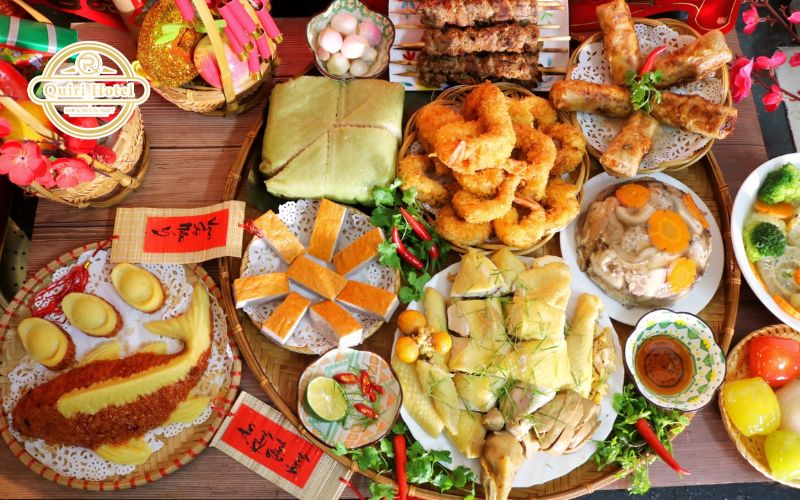
Braised pork with eggs is especially popular in southern Vietnam. The dish is slow-cooked until tender and is often eaten over multiple days during Tet celebrations. It represents warmth, comfort, and family togetherness.
Candied fruits and snacks, known as mut Tet, are commonly served with tea when welcoming guests during the holiday. They symbolize sweetness and hospitality, reinforcing the social nature of Tet celebrations.
Pickled vegetables such as pickled onions or radish provide balance to heavier Tet foods and are associated with renewal and good health for the new year.
Together, these foods create a complete Tet meal experience that balances flavor, symbolism, and tradition.
How Travelers Can Experience Traditional Tet Foods in Vietnam and Cat Ba
For travelers, experiencing traditional foods can happen in multiple ways, eating in local restaurants to joining cultural cooking experiences.
Many travelers try Tet foods through local markets and traditional restaurants. However, understanding the deeper cultural meaning often requires more immersive experiences such as cooking classes or local dining experiences.
On Cat Ba Island, visitors can experience Vietnamese cuisine year-round at places like Quiri Pub & Restaurant. The restaurant offers Vietnamese dishes alongside international cuisine and cocktails, and has built a strong reputation among international travelers visiting Cat Ba.
Quiri Pub & Restaurant serves a wide range of Vietnamese and international dishes and has been recognized by travelers as one of the must-visit dining spots on Cat Ba Island, serving tens of thousands of guests over the years.
Beyond dining, travelers can experience Vietnamese food culture more deeply through hands-on cooking classes. The Cat Ba Cooking Class with Quiri Kitchen allows visitors to learn how Vietnamese dishes are prepared while understanding the cultural role of food in Vietnamese life.
Cooking classes typically include ingredient introduction, knife skill practice, and guided cooking with local chefs. The experience often includes preparing Vietnamese dishes such as spring rolls, pho, or hot pot depending on the daily menu, and usually accommodates vegetarian or dietary requirements.
Many cooking classes also include shared meals and cultural storytelling about Vietnamese cuisine traditions. Some experiences also include learning how to make Vietnamese egg coffee, one of the country’s most famous beverages combining strong coffee and whipped egg cream.
Cooking classes on Cat Ba typically run for around half a day and cost around 1 million VND per guest depending on program structure.
For travelers, this type of experience transforms food something you simply eat something you understand culturally.
.jpg)
Travel Tips for Trying Traditional Tet Foods During Tet Holiday
People traveling Vietnam during Tet should understand that food availability changes significantly during the holiday period.
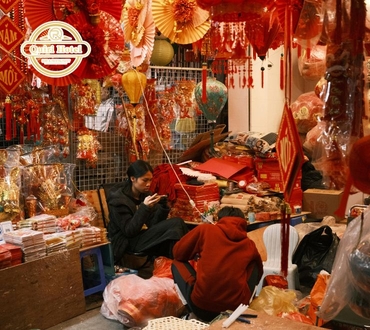
Before Tet, markets and food streets are usually full of traditional dishes and snacks. This is often the best time for travelers to explore Tet food variety.
During the main Tet days, many local restaurants close temporarily as families celebrate at home. Tourist areas may remain open but often operate with limited menus or shorter hours.
Understanding Tet food etiquette is also important. Sharing food is considered part of hospitality culture, and accepting food politely is seen as respectful behavior. In family settings, Tet food is often shared across large meals rather than served individually.
Travelers visiting during Tet should plan meals ahead and consider booking food experiences or cooking classes early, as availability may be limited during peak holiday periods.
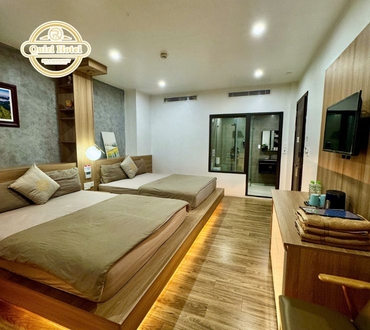
Experiencing traditional Tet foods is one of the most meaningful ways to understand Vietnamese culture, family traditions, and celebration during Lunar New Year. While many Tet dishes are seasonal, travelers can still explore Vietnamese food culture year-round through local restaurants and cooking experiences. On Cat Ba Island, visiting places like Quiri Pub & Restaurant or joining a cooking class at Quiri Kitchen allows visitors to experience Vietnamese cuisine beyond just tasting food, creating a deeper connection to local culture while staying in the convenient central location of Quiri Hotel Cat Ba.
Have 0 comment, evaluate Traditional Tet Foods Vietnam: Top Foods for Tet Celebration
Xin chào quý khách. Quý khách hãy để lại bình luận, chúng tôi sẽ phản hồi sớm