

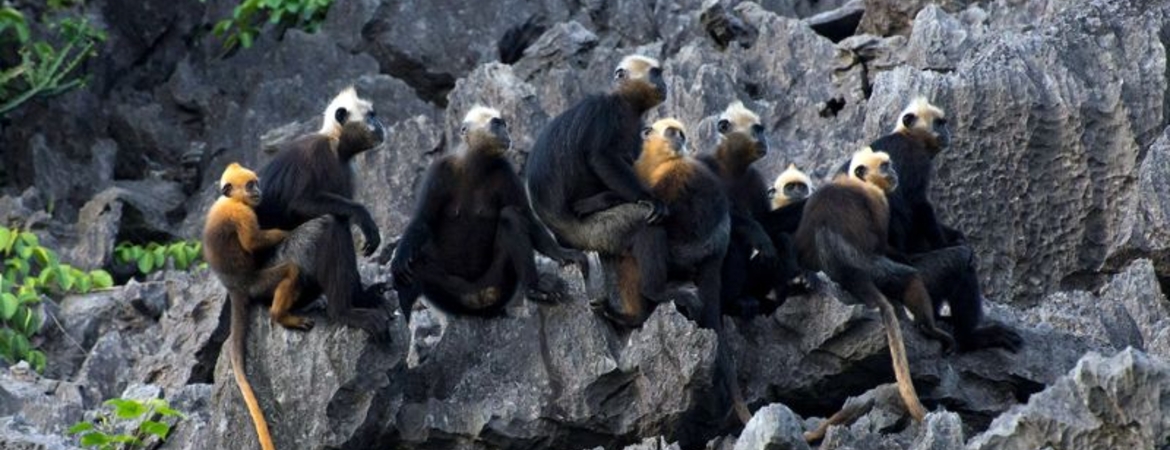
The Cat Ba Langur is a rare and beautiful primate found on Cat Ba Island, symbolizing the island’s unique wildlife. Staying at Quiri Hotel Cat Ba, travelers can easily explore the langur’s natural habitat and learn about local conservation efforts that protect this endangered species while enjoying the serene beauty of northern Vietnam.
What Is the Langur?
Langur is a rare population of the golden-headed langur (Trachypithecus poliocephalus), a species of Old World monkey native to northern Vietnam. These langurs live mainly on Cat Ba Island, an area of towering limestone cliffs and dense tropical forests inside Cat Ba National Park.
Langurs belong to the leaf monkey family (Colobinae), known for their long tails, graceful movements, and specialized diet of leaves, fruits, and flowers. The Cat Ba Langur stands out for its bright golden head, black body, and long white tail, making it one of the most striking primates in Asia.
Today, the Langur is considered critically endangered, with only about 60 to 70 individuals in the wild. Their small population and isolated habitat make them a symbol of Vietnam’s wildlife conservation efforts. Many travelers visit Cat Ba not only for its beaches and caves but also to learn about these gentle, elusive creatures that represent the island’s natural heritage.

Where Does the Cat Ba Langur Live?
The Cat Ba Langur lives exclusively on Cat Ba Island, northern Vietnam. Most of these langurs inhabit the rugged limestone cliffs and forested valleys inside Cat Ba National Park, a UNESCO-recognized biosphere reserve famous for its rich biodiversity.
Their preferred habitat includes steep karst mountains, secluded caves, and coastal forests that provide safety predators and human disturbance. These rocky areas make it difficult for visitors to spot them in the wild, but they offer the perfect shelter and food sources such as young leaves, fruits, and flowers.
The langur population is now scattered across several isolated subpopulations in the western and northern parts of Cat Ba Island. Because of their limited range, the Langur is considered one of the most geographically restricted primates in the world, highlighting the importance of protecting Cat Ba’s fragile ecosystem.
Why Is the Langur Endangered?
The golden-headed langur is one of the most endangered primates in the world, facing a serious risk of extinction. Decades ago, hundreds of these langurs roamed freely across Cat Ba Island, but their population dropped dramatically due to several human-related threats.
The main reasons include illegal hunting, habitat loss, and isolation of small groups. In the past, langurs were hunted for traditional medicine and food, while deforestation and uncontrolled tourism reduced the size of their natural habitat. As a result, the remaining langurs now live in fragmented territories, making it difficult for them to find mates and expand their population.
Another critical challenge is human encroachment, such as roads, construction, and tourism development disturbing their quiet limestone environment. These pressures, combined with the langurs’ low reproductive rate, make recovery extremely slow.
Today, conservationists consider the Cat Ba Langur a symbol of Vietnam’s urgent need to protect biodiversity. Every individual counts, and preserving their fragile habitat is key to ensuring the species’ survival.
.jpg)
Conservation Efforts to Protect Cat Ba Langur
Efforts to protect the rare monkey of Cat Ba have been ongoing for more than two decades with the goal of saving this critically endangered primate extinction. Since the early 2000s, the Cat Ba Langur Conservation Project, a partnership between the Vietnamese government and Fauna & Flora International (FFI), has played a key role in studying, monitoring, and safeguarding the remaining population.
Thanks to strict anti-poaching patrols, community education, and habitat restoration, the number of Langurs has slowly risen around forty individuals to about ninety today. Local rangers regularly patrol the forests, while awareness campaigns encourage residents and visitors to support sustainable and eco-friendly practices.
The project also works closely with Cat Ba National Park to maintain a safe environment and reduce human impact on the langur’s habitat. Although challenges remain, the gradual recovery of the symbolic primate of Cat Ba is a sign of hope that long-term conservation efforts can truly make a difference. Today, the langur has become a symbol of wildlife protection in Vietnam and a reminder of the importance of responsible tourism.
How Travelers Can Support Langur Conservation
Travelers visiting Cat Ba Island can play an important role in protecting the endangered primate on Cat Ba Island by choosing responsible and eco-friendly ways to explore the island. Every visitor’s action makes a difference to the survival of this rare primate and the preservation of Cat Ba’s fragile ecosystem.
One of the best ways to help is by joining eco-tours that are managed by licensed local guides who understand the wildlife and follow conservation rules. Visitors should avoid making loud noises, littering, or disturbing natural habitats when trekking in Cat Ba National Park. Supporting local homestays, hostels, and tour companies that practice sustainability also helps create jobs and reduce pressure on the environment.
Another meaningful step is learning about the Langur Conservation Project and spreading awareness about this unique species. Even small actions such as sharing information, donating to conservation programs, or simply respecting nature during your trip can contribute to protecting the langur’s home.
By traveling responsibly, visitors not only enjoy the beauty of Cat Ba Island but also become part of the effort to preserve one of Vietnam’s most endangered animals for future generations.
The Cat Ba Langur stands as a symbol of nature’s resilience and the importance of protecting endangered wildlife. By visiting Cat Ba Island, travelers have the chance to witness this rare primate in its natural habitat and contribute to sustainable conservation. Stay at Quiri Hotel Cat Ba to experience the island’s beauty responsibly - where comfort meets care for the environment.


Have 0 comment, evaluate Cat Ba Langur: The Hidden Treasure of The Island
Xin chào quý khách. Quý khách hãy để lại bình luận, chúng tôi sẽ phản hồi sớm